
When travel becomes a challenge: medical evacuation and repatriation

Traveling brings a sense of freedom and discovery, but it also brings risks. In the event of an emergency abroad, travelers not only have to deal with stress, but also with how to get help when a hospital or doctor is thousands of kilometers away from home. In such situations, medical evacuation and repatriation play a key role – processes that many travelers don’t even think about until they are needed.

What is medical evacuation and repatriation?

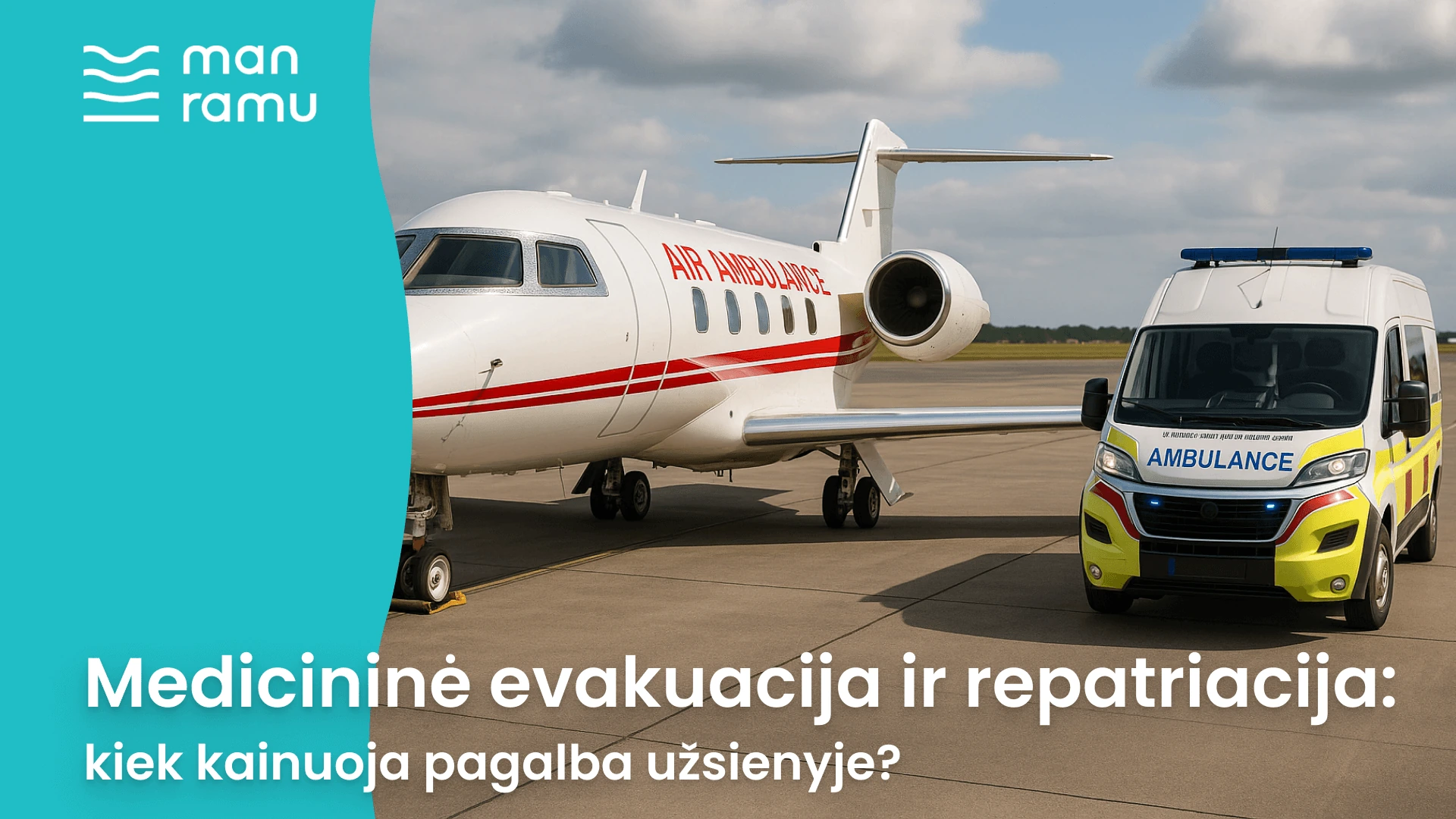
Medical evacuation is the organized transportation of a patient from the scene of an incident or local medical facility to a higher-level hospital or to one’s own country. Meanwhile, repatriation is the transportation of a patient or, in the case of death, the remains to their permanent place of residence.

Daiva Meškauskienė, head of OPS International, explains that these concepts are often confused: evacuation from the scene of an incident to the nearest medical facility may seem simple, but in reality it can cost five figures – especially if a helicopter is needed in the mountains or special equipment is needed in remote areas. Meanwhile, repatriation, when a patient or remains are transported to their home country, can cost up to 300 thousand euros.

She reminds us that it is very important to check in advance whether the chosen insurance product is valid in the mountains, at sea, in uninhabited areas or when riding a motorcycle, bicycle or scooter. Different insurers assess these risks differently, and some activities may be classified as non-insurable events.

When does a traveler need evacuation or repatriation?

Medical evacuation is most often required after serious injuries or sudden health problems:

  • Mountain injuries. Fractures, spine and head injuries are common when skiing in Italy, France or Austria, as well as when climbing in the Himalayas or Alps.
  • Infections and diseases in exotic countries. In Thailand, Egypt, or African countries, travelers often encounter poisoning, viruses, or tropical infections.
  • Accidents and heart problems. In case of serious injuries or heart attack, repatriation to Lithuania may be necessary.

“Recently, more and more Lithuanians have been choosing to hike in the Himalayas. The altitude of 3-4 thousand meters becomes a serious test for many – health problems arise due to the lack of air. Evacuation by helicopter from such places costs from 8 to 22 thousand euros,” says D. Meškauskienė.

She emphasizes that evacuation is only paid for when there is a medical reason – i.e., poor health. It happens that travelers request a helicopter because they are lost or tired, but this is not an insured event.

Complex logistics and thousands of details

According to Daiva Meškauskienė, the most complex cases involve repatriation, when a patient needs to be flown back from distant continents.

“When a patient’s condition is complicated, not only a doctor’s escort is needed – sometimes a specialized plane with an intensive care unit inside the plane is necessary. Such repatriation can cost tens or even hundreds of thousands of euros. One of the most expensive cases we have organized is the transportation of a patient from Australia, which cost 249 thousand euros.”

The organization requires precise coordination: coordinating medical facilities in both countries, flight permits, patient transportation within airport areas, and a local hospital in Lithuania must be ready to receive him. All this – in compliance with strict medical and data protection requirements.

Prices that surprise even experienced travelers

Evacuation from European mountains can cost 5,000–15,000 euros, repatriation from Asia or America – 50,000–250,000 euros, and in special cases even up to 300,000 euros. Transporting remains usually costs 3,000–10,000 euros, but when paperwork and transport are included, the amount can increase several times.

“I would recommend that you assess the planned activities, the country’s infrastructure and check the recommendations of the Ministry of Foreign Affairs before your trip. The further you travel from civilization, the higher the limit for the insurance amount should be,” advises D. Meškauskienė.

What is important to consider when choosing travel insurance?

Marius Jundulas, head of the “Man ramu” insurance platform, says that it is most important for travelers to evaluate not only the destination, but also the planned activities.

“Insurance must meet the real circumstances of your trip. If you will be in the mountains above 3,000 meters, skiing, diving or riding a motorcycle – it is necessary to make sure that these activities are included in the insurance coverage. Some versions of the policies do not cover such risks, so it is necessary to read the rules.”

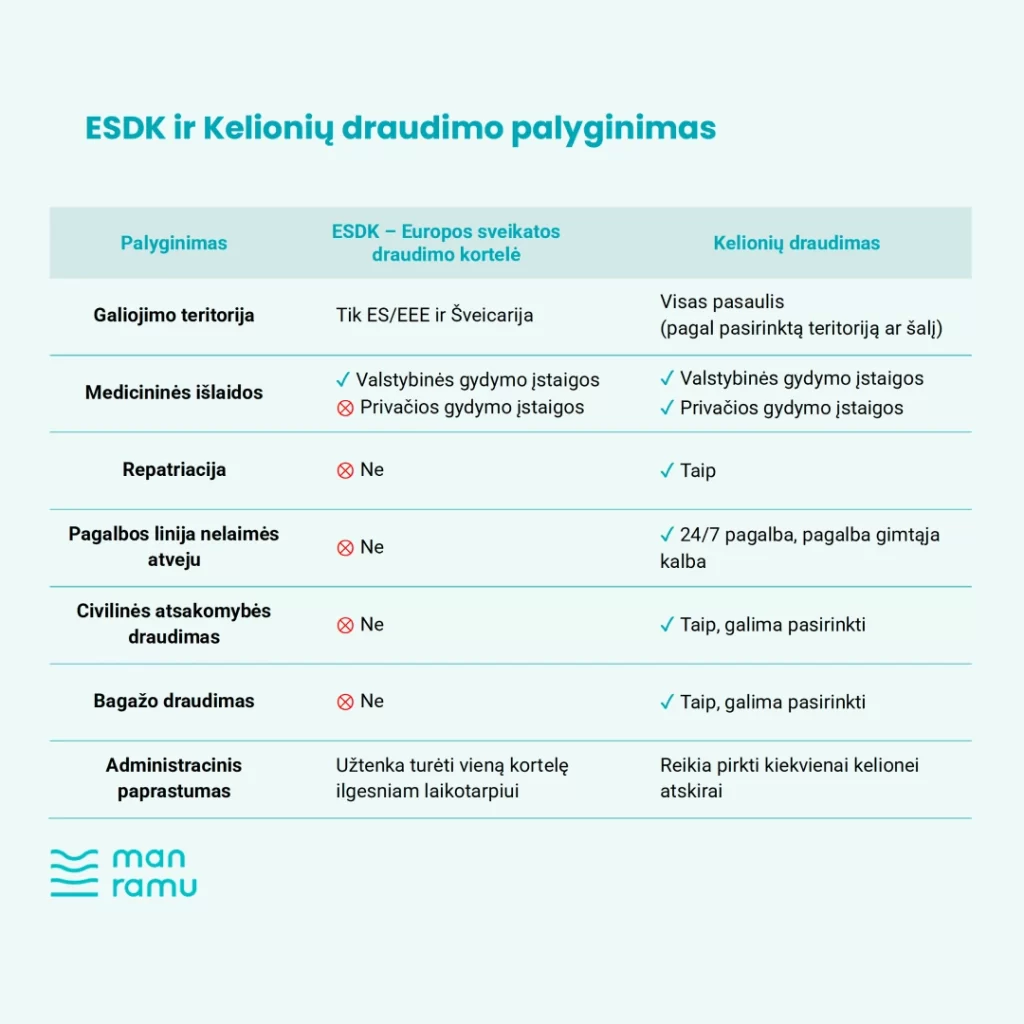
M. Jundulas also reminds that the European Health Insurance Card (EHIC) does not cover medical evacuation or repatriation costs. In the travel insurance policy, these services are included as part of the medical expenses, so in the event of an emergency, assistance can be provided quickly, centrally and without additional financial burden for the traveler.

Peace of mind when everything is thought out

Medical evacuation and repatriation are not theoretical concepts from insurance regulations, but real processes that help hundreds of people return home safely every year. Any one of us could be among them – so it is worth making sure that the entire assistance system works smoothly if needed.

As Daiva Meškauskienė says: “Our work involves a lot of technology, flight planning, and documentation, but the most important thing is people. When a patient finally reaches home after a long journey, all the numbers become secondary.”

About OPS International

OPS International is one of the largest assistance (roadside and overseas assistance) companies in Lithuania, providing assistance organization services to insurance companies and travel insurance clients for almost 30 years. The company’s team coordinates assistance to travelers around the world 24 hours a day – from selecting a medical facility to managing the medical evacuation or repatriation process. OPS International is a member of international assistance networks and cooperates with partners in more than 150 countries.

 „Man ramu“ draudimo platformoje galite įsigyti kelionių draudimą, apimantį medicinines išlaidas, nelaimingus atsitikimus, asmens civilinę atsakomybę ir bagažo draudimą.