
Black ice, slush, and slush are the most dangerous winter phenomena on the roads.

During the winter, driving conditions on Lithuanian roads can suddenly deteriorate due to various dangerous meteorological phenomena. Bare ice, slush, black ice are just a few of the challenges drivers face during the cold season. Sleet (icing during rain), heavy sleet (wet snow) also occur. In this article, we discuss what these phenomena are, how they differ, how often they occur in Lithuania, and what dangers they pose. We also provide practical advice on how to recognize these dangerous conditions and how to behave properly while driving.

How to drive on black ice

Bare ice and sleet

Bare ice is a layer of ice or frozen snow on the road surface. It most often forms when it rains, drizzles or sleet at positive air temperatures, and then suddenly cools down and the moisture remaining on the surfaces freezes into ice. Ice can also form when underground water freezes at night, or when fog droplets settle on cooled surfaces and freeze. In practice, ice also becomes a layer of packed snow, which compacts and turns into ice.

The sleet Slush is often confused with sleet, but they are different phenomena. Slush occurs when rain or drizzle falls on surfaces at sub-zero temperatures and instantly turns to ice – the ice forms simply as it rains, coating not only roads but also trees, wires, and buildings. Slush is more likely to form after precipitation (or after a downpour), when moisture is already on the surface and then freezes. In both cases, the surface becomes extremely slippery, but slush is often steeper and can quickly form a thicker layer of ice.

Frequency in Lithuania. Slush occurs frequently in Lithuania, as our climate is characterized by temperature fluctuations around 0 °C, thaws and repeated freezing. The greatest risk is in late autumn, at the end of winter thaws, and in early spring.

There are dangers involved. During ice, tires lose grip, braking distances increase significantly, and the car easily starts to skid when cornering or braking. Particularly dangerous places are bridges, overpasses, overpasses, uphill and downhill slopes, as well as shaded forested areas.

Tips for drivers (snow and ice):

  • If possible, postpone non-essential travel, especially if sudden icing is forecast.
  • Choose a slower speed, even if the road visually appears to be “just wet.”
  • Keep a greater distance from the vehicle in front.
  • Avoid sudden maneuvers: sudden braking, acceleration, sharp turns.
  • Slow down with the engine: release the accelerator, downshift smoothly.
  • Always expect worse traction on bridges and overpasses than on a regular road.

frostbite (cold without snow)

A frostbite is a severe cold snap when the ground surface is left without snow. This is a common situation in autumn, when the nights are already below freezing but there is no snow yet, or in winter after a thaw, when the snow melts and then the cold sets in again.

A frostbite is dangerous because it creates a false sense of security: the road appears clean and dry, but due to condensation, fog, or low humidity, a thin film of frost or ice can form at night – especially on bridges, overpasses, in lowlands, and near bodies of water.

Tips for drivers

  • If you see frost on the grass or cars in the morning, it’s likely that it could be slippery on the road in some places.
  • Pay attention to the temperature: it is most dangerous when it is around 0 °C or slightly below zero.
  • Drive as if ice has already formed in some areas: lower speed, greater distance, gentle maneuvers.

Black ice (invisible icing)

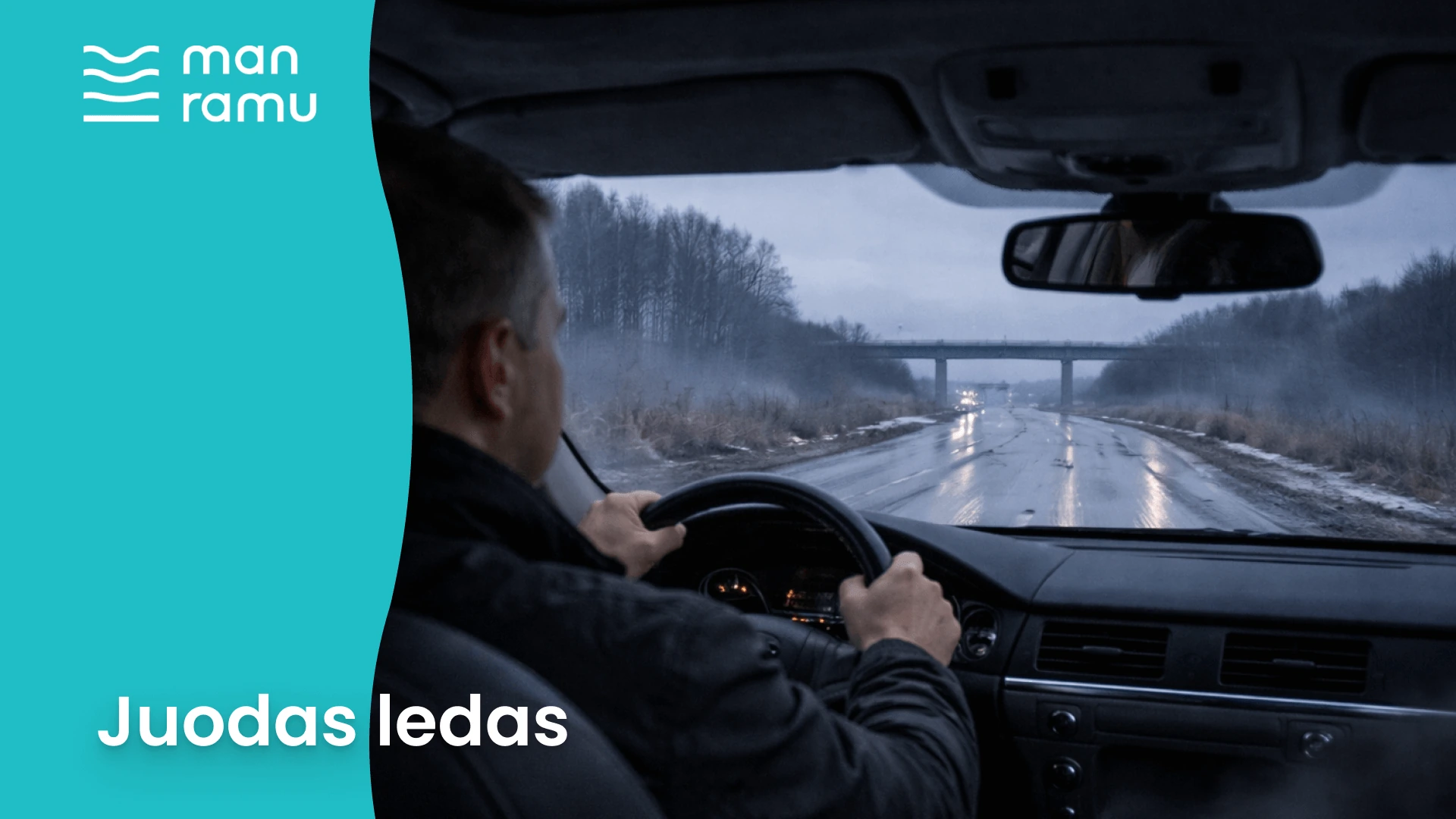
Black ice is a thin, transparent and almost invisible layer of ice that forms on a dark road surface. This makes the road appear wet or “shiny”, although in reality the grip may be almost zero. Black ice usually forms at night or in the early morning, when the temperature drops below 0 °C after a day of moisture (rain, sleet, melting snow).

How to recognize black ice?

  • The road is unusually shiny and appears darker in places.
  • Frost and ice are visible on the roadsides, and the road is “too beautifully clean.”
  • The sound of the tires rolling becomes muffled, the car responds more slowly.
  • When braking or maneuvering lightly, ABS/ESP is activated (pulsation is felt, stability control indicator flashes).

What to do if you drive on black ice?

  • Do not apply the brake suddenly or make sharp steering movements.
  • Release the accelerator and let the car slow down with the engine.
  • If the car starts to skid, gently steer the steering wheel in the direction of the skid to regain control.
  • Don’t accelerate – this often only increases slippage.

Prevention:

  • When the temperature is around freezing, especially in the early morning and evening, drive slower than usual.
  • Be especially careful when driving on bridges, overpasses, and in shaded areas.
  • Maintain a greater distance and avoid overtaking if conditions are unclear.

Drizzle and wet snow

Sleet is precipitation that falls as very wet snow or a mixture of snow and rain (usually at temperatures around 0°C). It forms a slush of water and snow on the road, which makes it difficult to control and significantly reduces visibility.

Dangers on the road:

  • Increased braking distance and poorer grip.
  • Ruts: The car can “drive” into ruts, and a sudden attempt to leave them can result in skidding.
  • Snow “aquaplaning”: When driving at higher speeds through a thick layer of slush, the tires can lose contact with the surface.
  • Windows and headlights get dirty quickly, dirt from other cars – poor visibility.

Tips for driving in sleet:

  • Reduce speed and avoid sudden maneuvers.
  • Keep a greater distance.
  • Drive evenly, try not to jump between ruts unnecessarily.
  • Ensure visibility: turn on the lights, clean the glass more often, maintain the wipers.

Stay safe

On winter roads, the most important things are vigilance, reduced speed and a calm driving style. Loose ice and slush create an obviously slippery surface, loose ice often deceives with the impression of a “dry road”, and black ice is the most dangerous because it is almost invisible. Sleet and wet snow make it difficult to control and see, and their consequence is often the formation of loose ice later. The practical principle is simple: when the temperature is around zero and there is moisture – drive as if the road is already slippery, even if it looks different from the outside.

Palygink draudimo bendrovių siūlomas kainas per kelias minutes!

Automobilio numerio tikrinimas
Įvesk valstybinį numerį
LT EU emblem